Saturday, September 23, 2006

Feeling-based learning

I am back from my training with the Genuine Contact program. It was one of those experiences that altered the way I percieve the world in fundamental ways. I changed the way I perceive myself, organizations and meetings. We worked with material that I had encountered before as I got trained to be an adult educator, but I got it at a deeper level. When I have taken learning style or personality type assessment, I tended to test out at a "feeler/intuitive/emotional" type of person. But there are three other orientations as well: the watcher, thinker, and doer.

In the workshop we broke out into groups with people that had a similar orientation to us. Not surprisingly I met with the woman that I had felt most connected to at the workshop. Our assignment was to note what we needed from a facilitator or teacher coming from the perspec tive of our learning style, and we were very excited about having the opportunity to express the experiences of the feeling-based person.

This perspective is not articulated very often, and certainly not in a business context. Feeling-based processes are not usually welcomed. This is a shame because there is a lot of value in getting in touch with one's feelings. With this comes intuition, opening space, "critical feeling," and attending to how things feel. In its broadest application, it is a quality of life issue.

Below are the things that we were able to capture on paper. The minimum requirements that we need from a facilitator/educator:
  • Invite feelings into the process. Make it okay to have and express them. Articulate this explicitly. Say it with authenticity.
  • Don't be reactive or judgmental when feelings are expressed. Of course if you do have reactions or judgments and then supress them, we will be able to feel that. So if you do have these reactions, it is better to acknowledge and own them. They are not wrong. It is okay. It helps us if they are out on the table.
  • Express your acceptance for the feeling side of the spectrum with your body language (nods, eye contact, open posture, etc.)
  • Accept your OWN feelings. This is the key to accepting someone else's.
Icing on the cake would be to understand the process of emotional learning.

  • I need to stop and feel in order to learn and remember. It may take me some time to process. I may need to go away from the learning environment and digest what has been presented to me before I can open to more.
  • Learning evokes strong emotions in me sometimes.
  • There is a continuous flow of emotions that goes along with the material I am being presented with.

This is not a problem for us, as long as it is not a problem with you. As Jewel wrote "I'm sensitive, and I want to stay that way."

We are very sensitive to the "energy field" of the meeting.

  • disturbances in the energy field (denial, judgements) flood us with "distracting" feelings
  • we have a hard time attending to learning content if there are funky interpersonal dynamics in the room
  • if other people are having an emotional reaction, we usually have an emotional response to that that we need to process

We are sensitive to the fact that emotions and especially their expression do not have a lot of acceptance in many contexts

  • we are upset about this, and when this is blatant it triggers our feelings about having our way of being rejected
  • we have a lot of energy going into self-monitoring to check our expression so that we will be accepted
  • we are very sensitive to whether the emotional orientation has acceptance or not
  • situtaions where the people are closed to our orientation can trigger feelings of anger, dispair, self-doubt about our value, guilt about wanting to have acceptance, and on and on
  • it is very scary to express our feelings about this

After we posted our flip chart paper we sat on the couch with a blanket over our heads. We felt extremely vulnerable to bring this forward. But it was also very exhilerating to do so.

We also got to learn about the needs of folks with other orientations. That was extremely valuable. I got a better sense of the implications of orientation when designing meetings or lesson plans that included everybody in the room. I need to give time for the watchers to reflect on their experiences. I need to provide data for the thinkers. I need to give the doers something to do.

So what does all of this have to do with the intersection of community and sustainability? For me, everything. These issues/topics have a strong emotional content for me. I want a community that includes emotional processes. I want to allow for emotional responses to the issues that come up when we consider sustainability.

I also want to open space for myself to broaden the content area of my blog. I am feeling more confident that I can simply come from my own point of view and add it to the collective pool of knowledge. That is the beauty of blogs. They provide so many points of view, and when someone is writing from their own place, I learn about theirs and can include it in my holding of the world. I can even broaden my own opint of view.

As an emotionally-based person I often have to go through a range of emotions to get to that magic place of acceptance. I may have to cry, rage, tremble... but this is the healing process, and I am dedicated to following that.

Friday, September 08, 2006

News

I have exciting news! Atlanta Beyond Oil (the new name for our Meetup group) will be hosting Richard Heinberg in Atlanta on Wednesday, October 11, 2006. I'll update you as we get the details nailed down.

So that has been what I've been working on instead of blogging. And I won't be blogging for two more weeks, as I am going to get more facilitation training in the Genuine Contact program. I am really looking forward to working with folks who value the whole person--the intellect and intuition, the mind and emotion, the rational and non-rational sides of us.

Which reminds me, have you seen the Peak Oil Blues website? I think its wonderful that the emotional aspect of confronting Peak Oil is being attended to.

When I get back from this series of workshops I won't be traveling for a while (thank goodness!) so I will be able to get back into my posting groove. I'll talk to you then!

Saturday, August 26, 2006

Conversations with other Peakers

Our Atlanta Oil Awareness Meetup Group has been having interesting conversations about coming up with our new name, and in the process we are realizing we need to clarify our goals and purpose. Here is my latest contribution to the dialogue: (Plus its an easy post while I am out of town taking care of Dear Great Aunt Lou's stuff. Q: how many margarine containers can one person have? A: I didn't count, but I bet its close to 100!!!)


Here's how I look at this... We have a big problem. What are we going to do about this? And so that begs the question... Who is the "we" that I am talking about? And here are the possibilities...

1) We can respond on the global level, which is doing things like having many nations signing the Oil Depletion Protocol. So how can I as an individual or small group affect this change? It is hard to do much. Each of us can sign the protocol. We can write to our national leaders and ask them to do it. We can ask other individuals to do the same.

2) We can respond on the national level, which is doing things like take the "Apollo Program" approach... Make it a national priority to address this problem, provide the resources, mandate programs, wage a propaganda campaign, etc. So how can I as an individual or small group affect this change? Lobby national leaders. Take it upon ourselves to educate the public. Encourage them to lobby, vote for people who will support that, etc.

3) We can respond on the regional level, which is doing things like convening bioregional conferences, summits, Mayor's initiatives, etc. We can support events that are already happening or start one of our own. On the individual level/small group level? Participate, volunteer, or be part of a team that puts one on.

4) We can respond on the state level, which is working with state government, lobbying, and all that political jazz that I don't know too much about. On an individual/small group level we can network with our government, political machines, advocacy organizations that have a Georgia chapter, etc. On the individual small group level, get involved in state politics and advocacy groups, volunteer, do fundraising, etc.

5) We can respond on a metro level (metro Atlanta) which involves learning about the plethora (is that a word?) of organizations doing regional planning, events (Bioneers for example), etc. Individuals and small groups have a lot of leverage here.

6) We can respond on the local level, (cities and towns) getting involved at the city council level, hold home showings of EOS and the Cuba film, etc. Individuals and small groups have lots of leverage here as well.

Another thing to consider is that we are a metro-level group. We do not yet have the membership to break down into smaller constituencies or build up to the state level. So it makes sense to me to work at the scale that we are at: on the Metro scale. This is where we will have the most effect on the world.

An additional bang for the buck is this is the level where the rubber will meet the road in terms of peak oil preparedness planning. We can't count on the larger scale governmental systems to respond adequately (see Katrina).

The other issues is that in the more dire possibilities, we will ONLY be able to deal with things on the local level because it will be too expensive to have a regional, national or global economy (transportation costs).

So to me, this points to the level of our efforts: the metro level.

One could argue that we could be a group of people who are supporting each other to react on a purely individual level (i.e. survival or head to the hills options) but I don't think that is where this group is at.

This is why I think a focus on "relocalization" is so important and why I want to join the Relocalization Network.

I see us as a small group working on the local (metro) level and networked with other groups working on their local levels. And we need to keep in mind that "relocalization" means different things depending on the scope of the region you are talking about: village, town, city, metro, etc.

###

So that is my current thinking on the issue. Any thoughts?

Thursday, August 17, 2006

Atlanta Oil Awareness

I have been working on several projects for my Atlanta Oil Awareness Meetup Group. I will tell you more about them when we have things a little more solid. But one of the things we are doing is producing a tabletop display. My friend from eleven design is doing our design work.

I have been thinking and reading about branding. If you have checked out the group listing at relocalize.net, you know that there are many takes on the concept of an oil awareness group. I think that "Sustainabile Atlanta" is probably too broad for us right now. I'm leaning towards the simple and straightforward "Atlanta Peak Oil." The folks at Sidney Peak Oil tried to initiate a campaign to get all of the groups to follow that format, but it didn't work. Everyone did their own thing.

Other titles in the running include Atlanta Powerdown, Atlanta Post Carbon Solutions, and Atlanta After Oil. If you have any feedback, ideas or suggestions I'd love to hear them!

Sunday, August 13, 2006

Update

Well I am back from my out-of-town adventures, but I will be leaving again soon. Great Aunt Lou is ready to sell her house, so Mom, Dad, Aunt and I are going back to Chicago to help her dispose of her stuff.

A week after that I will be going to another series of workshops, so my blogging will continue to be slow.

In the meantime I want to announce the inception of a friend's blog: The Unseen Role of Denial. It is quite eclectic, ranging from esoteric spiritual philosophizing to left wing political rants. He had been writing long responses to other folk's blogs, so I encouraged him to start his own. Check in on him from time to time to see what he is up to.

Saturday, July 22, 2006

Eldercare, Part Two

Whew! I am back home, and we got Great Aunt Lou placed in an assisted living retirement community. As miserable as she was at home, she didn't want to go. I meant "the end of the road" for her, and she had a very difficult time confronting this. I can't say I blame her, but we encouraged her to reframe it as a transition rather than a funeral. Thank God she has enough money to be in a place where they will spoil her. I would hate to have to leave her somewhere that was awful. Its all because of compound interest. She just lived long enough for it to accrue.

It was the first time I was involved in the care of an elder. It was an eye-opening experience. And a very valuable one. I really saw how our decisions and habits create our future. By her own admission she was not very flexible. She hadn't moved in 50 years. She said everything was so much harder when you are 92. She had no sense of how fortunate she is. She is healthy, can hear and see and walk and had a network of friends and neighbors looking after her. They are the ones that called us and said we needed to intervene.

This got me thinking about community. What an amazing thing to have neighbors looking in on her every day! Frankly, her community was appalled that her family had not stepped in already. But we had been trying to convince her to move to a retirement community for 20 years. What can you do when they say no?

It probably helped that there was two of us. We played "good cop, bad cop." I got to be good cop since I hadn't been dealing with her all my life. I didn't have a backlog of frustration to deal with. But by then end of our visit, when she said we were kicking her out of her house, I reached the end of my patience. We were doing everything in our power to protect her, but she couldn't see that.

It brought home the importance of getting my will, living will, trusts, power of attorney, etc. together. Fortunately these were all in place. One less hurdle to cross when the time comes.

She is a Depression baby. It is really hard for her to spend money on herself. But what was she saving it for? She is 92 for Heaven's sake!

She was a natural recycler. She saved all of the plastic packaging she encountered. On the one had I wanted to toss it all (we stuffed it in recycle bags) and on the other hand I appreciated her valuing of the durable things (plastics, especially) that we throw away. They are so over engineered. A grocery bag is used once, but will live 1000 years. Crazy.

She lived in the neighborhood for 50 years. She new some of her neighbors before they were born. Out of that comes a certain loyalty. One of her neighbors cried when we told her she was gone.

I am pretty much exhausted. Was on the road for 15 hours today. I am going to the beach in Florida for a week to recuperate. Then I'm off to Minnesoota to visit Mr. Logan's family. So please excuse me if I don't post much. I will do what I can until life settles down again.

Monday, July 10, 2006

Eldercare

My great aunt is 92 and doesn't have any kids of her own, so helping her out falls upon my mom, her sister, and me. All four of us live in different states, so we are in the process of sorting out who can do what. Right now I am on the road, making my way to Chicago with my aunt. We would like to get her moved into an assisted living situation, as she is starting to have paranoid delusions. It might be dementia, or it might just be that she is dehydrated. But in any case, if she continues to call the police every day they might have her taken to the hospital, evaluated, and then declared incompetent and placed in care that someone else chooses.

So our goal is to convince her to exercise her choice while she still can.

I keep imagining myself in her shoes. What would it be like to give up your home of 50 years, and go live in an institution? What would it be like to know that you are never coming home again?

None of my grandparents needed this kind of care. They all died at home. So it is new territory for my family.

We did find a great resource for you to file away in case you might need it some day. It was put together by the National Institute on Aging, which is a part of the National institute on Health. It is specifically for those giving
long distance care. It offers a helpful perspective for those of us who don't live in community with our elders.

Wednesday, July 05, 2006

Comparing the Scenarios about Peak Oil


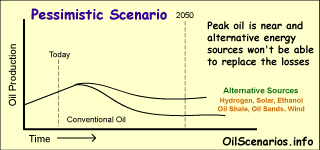
I've had this link in my "future blog topics" file for a while. OilScenarios.info presents the range of assumptions about our oil situation and their corresponding predictions about our future.
This site provides a general introduction to the peak oil debate by providing an overview of five general scenarios for the future of oil and, in the minds of many, scenarios for the future of our society!
The author divides the continuum into five categories: Pollyanna, Optimistic, Plateau, Pessimistic, and Head for the Hills. As I read through them, I realized that I fell into the Pessimistic category, and should probably disclose that somewhere on my blog. If I examined my fears, they would fall into the Head for the Hills category, but I don't have the energy or stamina for that, so I am just crossing my fingers and hoping that a Pessimistic attitude is realistic enough.

Actually if I look at my behavior in terms of preparedness, I am acting like a Pollyannist. Hmm. I guess that is a question for everybody: are you congruent between your point of view and your actions? And if you are not, what kind of support do you need to get yourself where you want to be?

Tuesday, June 27, 2006

Sustainability Open Space Asheville

June 26th Chris Weaver opened the space for a new network to form for those who felt called to come together to discuss sustainability from the Asheville, NC area. He sponsored an Open Spaces Technology workshop with the theme of "Transforming ourselves and our Culture to Dynamic Sustainability."

In an open space meeting the folks that show up set the agenda. There was a wide range of topics, including:

  • collaborative art, art activism, beauty
  • nuclear transport
  • educating and integrating the poor
  • water catchment and conservation, urban homesteading
  • growing medicinal plants, making a living on the land in the city
  • transforming the public school system, sustainable regional transportation
  • green burial
  • creating an event in Asheville like Portland's City Repair
  • using cloth grocery bags
  • creating an Asheville intentional community group
  • preparing for peak oil
  • teen pregnancy
  • meaningful inclusion of the racial and ethnic experience

People went to break out sessions that they were drawn to and had discussions that were recorded and then bound into a book of proceedings. Now everyone has a record of what went on, who was where, and how to get in touch with them. We gathered in a large Circle at openings and closings, passed the talking stick, and danced the spiral dance. Through intensive listening and inspired speaking a community was born.

Chris envisions SOS Asheville to be a space for community people and organizations to connect, supported by a Council of Leaders. If all goes well, this group could be a prototype for other SOS Community regional groups. Maybe we will see on in Atlanta.

The group will have a web presence at http://SOSAsheville.wordpress.com/. Keep an eye on them as I predict good things will be happening!

Saturday, June 24, 2006

Open Space Technology


Next week I will be in training again, this time to learn how to facilitate Open Space workshops. Open Space Technology is great for large diverse groups who have complex problems to solve. It allows people to set their own agendas, take responsibility for the areas they feel passionate about, and if enough time can be set aside, begin to develop their action plan. The workshops are self-organizing, and it is very empowering for people to see that they do not need formal leaders to get things done. They can do it themselves.

I think it would be a perfect fit with my goal of helping communities relocalize their resources. I am very excited about it.

My trainers will be Chris Weaver of Springbranch and Birgitt Williams of Dalar International Consultantcy. During the course of the workshop we will be running a 1.5 day Open Space gathering on the topic of Sustainability. If you are in the Asheville, SC area come on down and join us!

As usual, I will give you a report when I get back.

Thursday, June 15, 2006

Groovy Green


Groovy Green is a new on-line magazine that started covering Ithica, NY and has expanded to discuss broader green concerns. They are particularly supportive of their readership taking action.

This is the time for taking action in our lives. We will be expanding our focus to include ways that you can become more self-sufficient, as well as challenging ourselves at GG as a way of inspiring others.
They are expanding their base of contributors (including Yours Truely) as they are striving to become a "People's Green Magazine." They have pictures and fun videos and a blog. They're your one-stop shop for all your Green desires. Check them out!

photo by benjamin wagner

Friday, June 09, 2006

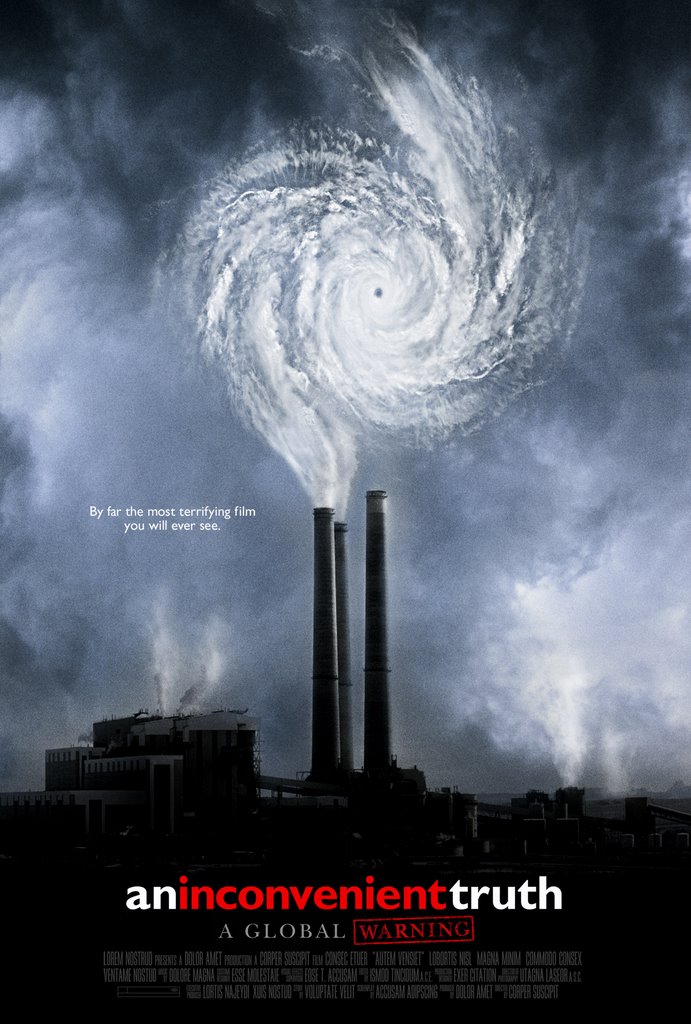
An Inconvenient Truth

Wow--I just came back from the opening night of An Inconvenient Truth in Atlanta. Our showing was sold out, and from the looks of things, so were other showings. I commend the theatre for having booths in their lobby from local organizations. I snuck my Oil Awareness Meetup Group's fliers on the community table.

There was a palpable buzz in the audience--it reminded me of the excitement before a rock show. We sat through lots of previews targeted for our demographic segment.

So the main thing I want to say about it is--go see it. It is very well done. You'll learn about Al Gore (although I got a little tired of all the close up profile shots of him being thoughtful) and see him in action with his high tech global warming show.

He has given his show over 1000 times, so it is very well developed. He says he has tried to get inside his audiences' heads, to understand their objections, and to answer to them. So he confronts everything you have ever heard about global warming head on, and with excellent graphics, uses data to let you draw your own conclusions.

It was wonderful to be in an audience that boo'd and hissed when the Bushes where on. There were many moments when the film audience joined in the applause of the studio audience. I think the line that got the biggest response was: "Political will is a renewable resource." We have to let our representatives know, not matter what our affiliation, that this issue is important and will determine our vote.

The climatecrisis.net website includes and extensive list of actions that we can take to make a difference. They are virtually the same actions to take to prepare for peak oil. These issues are not really separate. In fact our peak oil group has started to climate change in our focus.

This week I pledge to change the air filters in my a/c and check the pressure of my tires. Its the least I can do for the planet.

Have a peak at the list for yourself. Anything you've been meaning to get around to? Now's the time.

Thursday, June 01, 2006

The Power of Community DVD

My parents and I watched Community Solution's The Power of Community: How Cuba Survived Peak Oil tonight. We liked it, but before I review it I need to set up the background.

I'm visiting my folks in between Summits and Workshops and the last few nights we have been talking about the possibility of us moving back to California. During this discussion, I have brought up my concerns about sustainability, the quality of life and even survivability in the face of oil depletion. So we got to sharing our future scenarios from a half-full, or half-empty perspective. Mom has a grim view and felt somewhat hopeless about the whole thing. Dad felt that people would rally in the face of adversity. I was just plain getting depressed. Then I remembered that I had brought the Cuba DVD, and this was the perfect occasion for it. So I invited them to join me in watching it.

We all liked it a lot. Dad was impressed with the production values. He said it well-crafted, with a good balance of talking heads, graphs and action shots. It explained the problem concisely, without being overblown. It was very matter of fact and presented in digestible segments. Once it got to the part about how the Cubans dealt with their situation we were rooting for them. It presented their struggles and solutions in a human scale. It was inspiring.

Mom thought it clearly explained the problems and solutions and she liked the way they used an outline to help us follow along with where they were in the presentation. She thought it was hopeful and upbeat even if she wasn't sure how their solutions would translate to her community.

I have a background in independent feature film production, so I am pretty critical. But I found nothing that detracted from the people or the message. It was seamless in its delivery. The folks they interviewed were very articulate and I learned a lot. We are not Cuba, but it was helpful to see that people pulled together to solve their problems and made progress in a matter of a few years.

Tuesday, May 30, 2006

Post Carbon Relocalization Network Meeting

On Saturday May 20th the Bay Area Outposts of the Post Carbon Institute got together to share what they have been doing. The mission of Post Carbon Institute is to assist communities in the effort to Relocalize and adapt to an energy constrained world. One way they do this is to support the individual Outposts and help them network with each other.

Eventually, as each Outpost learns from working with it's community, it will pass this information back up to PCI, who will compile these into "best practices" which they will then disseminate back to the Outposts. They hope to use the technology of the internet to assist people in joining forces and ultimately having face to face meetings.

Julian Darley, the founder of PCI, explained that they will focus and filter the information they gather because time is of the essence now, and we can't afford to miss any piece. They are upgrading their software, so keep check their website to see what they are offering. New services will roll out soon.

We heard from organizers from Willits to Ventura. Not surprisingly, California has the most Outposts of any state. Each gave a short presentation about their group. Here are some highlights:
  • Folks in Pacific Grove (Sustainable Monterey) have found that talking about the economy was a way for people to understand the impact that peak oil will have. They will be inviting folks to come to a "visioning" to discuss what they would like to see in the future.
  • Let's Live Local has three goals: to reduce their dependence on fuel (propane bills are as much as $500 a month in the winter); to reduce their dependence of fuel for transportation (car co-ops, ride share, buses); to promote sustainable ways of living (greenhouses, a community garden). They found that people in their community had a high interest in alternative energy.
  • Bay Area Relocalize produced a Strategy Summit with business, non profits and officials to connect the community groups with each other. The folks that participated in this have started their own projects. BAR has written "Building a Resiliant Bay Area Economy" which will be distributed soon. They plan on working with a neighborhood and doing an in depth assessment of it.
  • Big Sur has had to relocalize. When there are mud slides on Hwy 1 they are cut off for months at a time. They hosted their first event with speakers and a film, and had 70 people come. At their next event they will have committees set up for people to join based on what people wrote that they could contribute after the first event.
  • The Powerdown Project is being developed by Richard Heinberg's students at New College of California. They are developing a relocalizing template and will offer themselves as interns to cities when it is complete. They will have a website up at powerdown.org in a couple of weeks.
  • One member shared what he learned working in Marin County and going to every city council meeting. He said a big issue was getting past the gate keepers. Politics are complicated even on the local level. Cultivate connections and try to learn the internal dynamics. The city councils plan their agenda months in advance, but there is usually time to allow the public to speak up about their concerns. They can't comment in response because it is not on their agenda for that meeting.
  • APPLE (Alliance for Post Petroleum Local Economy) had a big event that they did a major media campaign for. They had 300 people show up. They found that folks were willing to give up an evening, where day long events don't have as much of a draw. They are starting an every other month film and speaker series. The group gets together to work on alternate months. They encourage members to follow their passion.
  • Peak Moment is a local public access television series. They hope to take it on the road.
  • The San Francisco Oil Awareness Group presented a film about their development. (I sure could relate to the part when people come to one meeting and then never come back.) For more about their biggest accomplishment, see below.
  • The San Francisco Post-Carbon Outpost has produced The Oil Poster, which has been distributed to every member of the US Congress. Thanks to folks purchasing the poster, they have been able to give away 2000 of them to educators. They also supported the creation of a college course about peak oil that they hope to adapt to teach to the general public and officials. The students were so excited that they went to the Washington DC conference during Spring Break.
  • In the Santa Clara Valley they are working on projects to do outreach to the public and local government, including making speakers available and producing a DVD to hand out. They want to offer workshops in gardening, food storage, etc. They also are fighting to keep 17 acres from being developed. We need the acreage to produce food.
  • In Santa Cruz the city council is co-sponsoring a participatory town hall meeting in September.
  • The new Diablo Post Carbon Study Group is starting to take action. They have an inventory project and do screenings of the End of Suburbia and the Power of Community (the "Cuba" film).
  • The Livability Project is disseminating preparedness information. Every month they take a new theme. They also sponsor a Community Feast at a local cafe.
  • There is a "social ecovillage" in Oakland that produces a monthly calendar of events. People focus on making connections. It's been going on for eight years.

After that we had a Q&A with the San Francisco group about how they got their board of supervisors to pass a peak oil resolution. They emphasized the importance of knowing the inner workings, working with aids, inviting the council members to panels, and chance meetings. Apparently words like peak oil, localization, relocalization, even local are hot buttons that may backfire. "Energy vulnerability" seems to be a neutral term (so far.)

Then we had break out sessions. I talked with another member about getting folks to come to meetings. I need to do some more outreach. And our group needs to decide on a project to take on jointly.

We decided to meet quarterly. I hope I can come back for the next one. It was totally inspiring.

Saturday, May 20, 2006

Report on the Energy Vulnerability Summit

I am inspired. The Energy Vulnerabilty Summit in Petaluma. CA was perhaps the first time in history when local government officials have gotten together to learn about and discuss peak oil. It was, by all accounts, very successful. Here is my diary of the day:

Up at 5:00 AM: For some reason the stove won't light. Are we out of propane? Harbingers of the future. I have toast instead of eggs. And lots of coffee.

7:15 AM: I join the gang at the Petaluma Community Center. I am put to work folding napkins for lunch. Our event has been "greened" by Green Mary. We use real plates and compost our food. I chat with Daniel Lerch. He is down here from Portland. He brought a white paper he wrote for the Metro Council on "how Metro may approach the possibility of future uncertainty in the supply and price of oil." He found that framing peak oil as "uncertainty" enabled municipalities to tap into the problem with their "risk management" paradigm. I munch on poppyseed muffins. To heck with the diet. And drink more coffee.

8:30 AM: People are starting to register. They expect about 40 local elected and appointed officials. Less than they want, but more than they feared.

9:00 AM: Tanya Narath welcomes us. She is the executive Director for the Leadership Institute for Ecology and the Economy that runs a once-a-month training program about public policy and sustainability issues. She introduces our first keynote speaker, Richard Heinberg, author of Powerdown and The Party's Over and core faculty member at the New College of California.

9:15 AM: Richard leads us through a very skillful introduction to our energy vulnerability (the non-confrontational way to say "peak oil" to municipalities). You can practically see the light bulbs turning on over the participant's heads. Much of it is probably familiar ground to most readers, but I did hear a statistic that is new to me. By 2010 we'll need 30 Mb/day in addition to our current production globally, but we only have 16.5 Mb/day coming on line. So we can plan on being 14.5 Mb/day short in four short years.

He also pointed out the Hirsch reports use of the word "unprecedented" in their report.
Another fact that hasn't gotten any press is about the demand destruction of natural gas. $15/1000 sq Ft costs forced companies to relocate overseas where NG is cheaper. And 100 chemical plants have shut down in the last six months, loosing 100,000 jobs.

His final message was that our primary strategy must be to reduce demand, and secondarily to find alternatives.

10:00 AM: We have a lively Q&A. One theme was the folly of investing in infrastructure for LNG or coal or even uranium because at some point, and in some cases very soon, we will run out of cheap LNG and coal and uranium.

A petroleum engineer said that the decline is not speculation--it is well known and based on thousands of wells and how they decline. She also added that we won't find another giant--they know where the fields are, and the technology to find fields is quite mature.

Richard said that retired oil executives come up to him all the time after his talks and validate peak oil. He even met the guy who did Chevron's "will you join us" campaign. He said that Chevron's CEO wanted to get the word out to people without panicking them.

10:45 AM: After a break, the participants met in groups to discuss the question "what are the vulnerabilities, challenges and obstacles faced by your jurisdiction?" I don't want to violate the confidentiality of the participants by writing about it here, but suffice to say that people began to grapple with the issues that they will face trying to fulfill their responsibilities to provide services with expensive, scarce oil and an eroding tax base.

11:45 AM: We had a yummy lunch catered by Whole Foods. I enjoyed getting to know community leaders who were (now) concerned about peak oil. I switched to decaf.

12:30 PM: Tanya introduced our second keynote speaker, Julian Darley, the founder of the Global Public Media and the Post Carbon Institute and author of High Noon for Natural Gas.
He emphasized the importance of working with local officials--how they are the ones who have the power, and are the ones who are going to be feeling the crunch. The lesson of Katrina is YOYO (you're on your own!)

He shared a survey of what municipalities are doing around the world to deal with their energy vulnerability. I won't go into detail here, but will list them in case you want to do follow up research:

  • San Francisco, California
  • Burnaby, British Columbia, Canada
  • Portland, Oregon
  • Kinsale, Ireland
  • Denver, Colorado
  • Hervey Bay, Queensland, Australia
  • Franklin, New York
  • Sweden
  • Sebastopol, California
  • Willits, California
  • Hamilton, Ontario, Canada

He is working on a new book with Richard called Relocalize Now!

1:15 PM: Another Q&A session. Julian pointed out that the European carbon trading market has collapsed in the last few weeks. They gave away rights to the companies which set up an inflation pattern. This was probably the result of industry pressures. So he says learn from their mistakes.

He felt that for car co-ops, the best option was public ownership via municipalities. Most co-ops have about 20 cars per person. He pointed out that when we start to share, we immediately get a factor of 10 energy demand reduction instantly.

He explained that many European cities, know for their walkability, were laid out pre-petroleum. The ones that survived were a cluster of people surrounded by farmland. If we want to farm for our energy needs, without petroleum inputs, we need to do careful planning and start early as it takes time.

He also addressed the problem of the absurd amount of regulation we have around thing like getting permits for a vertical wind turbine--it can take $100,000 to go through the permitting process for a $1000 turbine.

1:45 PM: Another break out session, with the question "Discuss specific, actionable ideas that will enable you and your jurisdictions to successfully navigate the vulnerabilities, challenges and opportunities that you identified this morning." Switch from decaf to regular.

2:45 PM: Report back from the groups. My personal favorite actionable idea was that in each suburban tract the city would commandeer a house every half a mile to become the neighborhood store.

My personal commitment is to get a forum going (probably at Post Carbon) for peak oil facilitators/educators. I discovered that this "niche" that I had figured out is one coveted by several other people. I hope we can work together and support each other.

3:15 PM: Close. We had a lovely poem and Tanya thanked the sponsors and volunteers.

I was so pleased that I had the opportunity to participate. They are planning on having another summit the last weekend in September that is open to the public and I hope that I can come to that one as well.

Tuesday, May 16, 2006

Energy Vulnerability Summit in California

I am heading back to California to further my education, so will be off line for a short while. I will be assisting at an energy summit. Here is the blurb from the Post Carbon Institute newsletter about it:

Energy Vulnerability Summit: Can Local Public Policy Support a Competitive and Sustainable Economy in the Face of Rising Energy Costs?
–May 19 – 8:30-3:30 – Petaluma Community Center – Petaluma, California

The Energy Vulnerability Summit will provide a forum for North Bay elected and appointed officials to explore the local implications of rising energy costs. Richard Heinberg will discuss the main factors influencing energy costs and supplies and Julian Darley will give examples of on how other communities are preparing to diversify their local energy supplies through investments in energy efficiency and renewable energy solutions. This first session is limited to
elected and appointed officials only, but a follow-up summit is planned for September 29 that will include business leaders and the public. For further information contact coleader@ecoleader.org or (707) 578-9133

Thursday, May 11, 2006

Action Needed to Safeguard Organic Standards

From my inbox today:

Action Needed to Safeguard Organic Standards

May 10, 2006


It’s time to act fast!

The USDA has announced a very short public comment period (ends May 12, 2006) on a proposal to amend the National Organic Program (read the proposal here) in a manner that would weaken organic standards. The USDA's actions were requested by a very small handful of members of Congress. Take action now and tell the USDA you support strong organic standards!

This legislative backroom deal was born in November 2005 during a late-night, Republican-only session consisting of a few conference committee members who voted to adopt the proposed amendment after congressional negotiators from both sides had adjourned.

In 2006, the amendment resurfaced as a last-minute attachment to the Agricultural Appropriations Bill, thereby avoiding full congressional debate on the content of the amendment. The Appropriations Bill, along with its riders, passed despite over 350,000 letters and phone calls from consumers, farmers, retailers, processors, and other concerned citizens and organizations to their congressional representatives. At the time of its passage, a number of Congressional representatives made statements condemning both the undemocratic process and substance of this change to the organic law.

After 35 years of hard work, the U.S. organic community has built a multi-billion dollar alternative to industrial agriculture.

Now the USDA is proposing to amend the National Organic Program regulations to reflect these legislative changes made in Congress – with very little time allowed for public comment.

The USDA proposal could allow:

Young dairy cows to be treated with antibiotics and fed genetically engineered feed prior to being converted to organic production.

Numerous synthetic substances, including over 500 food contact substances, to be used in organic foods without public review and approval by the National Organic Standards Board (NOSB).

TELL USDA TO KEEP THE ORGANIC LABEL TRUTHFUL. COMMENTS MUST BE RECEIVED BY MAY 12!

"Congress voted to weaken the national organic standards that consumers count on to preserve the integrity of the organic label," said Ronnie Cummins, National Director of the Organic Consumers Association. "The process was profoundly undemocratic and the end result is a serious setback for the multi billion dollar alternative food and farming system that the organic community has so painstakingly built up over the past 35 years.

It’s easy to take action. Click on one or all of these links for streamlined action links and more information.

Organic Consumers Association: has fill-in action link

The Center for Food Safety: has fill-in action link

Consumers Union: has fill-in action link Additional in-depth background and report on the issues, and comment information: National Campaign for Sustainable Agriculture: has “click here” action link.

Sincerely,

Georgia Organics
email: info@georgiaorganics.org
phone: 678.702.0400
web: georgiaorganics.org

Action Needed to Safeguard Organic Standards

From my inbox today:

Action Needed to Safeguard Organic Standards

May 10, 2006


It’s time to act fast!

The USDA has announced a very short public comment period (ends May 12, 2006) on a proposal to amend the National Organic Program (read the proposal here) in a manner that would weaken organic standards. The USDA's actions were requested by a very small handful of members of Congress. Take action now and tell the USDA you support strong organic standards!

This legislative backroom deal was born in November 2005 during a late-night, Republican-only session consisting of a few conference committee members who voted to adopt the proposed amendment after congressional negotiators from both sides had adjourned.

In 2006, the amendment resurfaced as a last-minute attachment to the Agricultural Appropriations Bill, thereby avoiding full congressional debate on the content of the amendment. The Appropriations Bill, along with its riders, passed despite over 350,000 letters and phone calls from consumers, farmers, retailers, processors, and other concerned citizens and organizations to their congressional representatives. At the time of its passage, a number of Congressional representatives made statements condemning both the undemocratic process and substance of this change to the organic law.

After 35 years of hard work, the U.S. organic community has built a multi-billion dollar alternative to industrial agriculture.

Now the USDA is proposing to amend the National Organic Program regulations to reflect these legislative changes made in Congress – with very little time allowed for public comment.

The USDA proposal could allow:

Young dairy cows to be treated with antibiotics and fed genetically engineered feed prior to being converted to organic production.

Numerous synthetic substances, including over 500 food contact substances, to be used in organic foods without public review and approval by the National Organic Standards Board (NOSB).

TELL USDA TO KEEP THE ORGANIC LABEL TRUTHFUL. COMMENTS MUST BE RECEIVED BY MAY 12!

"Congress voted to weaken the national organic standards that consumers count on to preserve the integrity of the organic label," said Ronnie Cummins, National Director of the Organic Consumers Association. "The process was profoundly undemocratic and the end result is a serious setback for the multi billion dollar alternative food and farming system that the organic community has so painstakingly built up over the past 35 years.

It’s easy to take action. Click on one or all of these links for streamlined action links and more information.

Organic Consumers Association: has fill-in action link

The Center for Food Safety: has fill-in action link

Consumers Union: has fill-in action link Additional in-depth background and report on the issues, and comment information: National Campaign for Sustainable Agriculture: has “click here” action link.

Sincerely,

Georgia Organics
email: info@georgiaorganics.org
phone: 678.702.0400
web: http://rs6.net/tn.jsp?t=pc45lvbab.0.b75uhpbab.455vg9aab.690&p=http%3A%2F%2Fwww.georgiaorganics.org

Monday, May 08, 2006

A query

Mr. Logan and I have been discussing the question of how to inform people about peak oil. I have been of the opinion that people don't want to hear bad news which leads to resistance. He thinks another factor may be coming into play. It is illustrated by a CNN poll released today:

A total of 61 percent blamed "unethical behavior" by people involved in the production of oil and gas for the price increases, which have driven the average U.S. price for self-serve regular gasoline to nearly $3 a gallon.

Another 26 percent said the market forces of supply and demand were responsible.
Mr. Logan explained that there is a point of view that says we do not have a real shortage of oil, the oil companies are manipulating supply in order to get the biggest profits. Along this line of thinking Matthew Simmon's position as an industry insider becomes a liability to his credibility instead of an asset, as he would be supporting the view that there is a shortage because he would gain from it.

The argument that has worked for me is that the oil companies don't want to say there is a shortage to their stockholders, so they would minimize this.

What do you say to people who think it's a conspiracy?

Thursday, May 04, 2006

Women and Peak Oil

There are few women's voices in the Peak Oil movement. I have to admit, dear reader, that this has intimidated me somewhat. In writing this blog and finding my own voice I have struggled to give myself permission to have my own point of view, value it, and share it. And I have a long way to go. I rarely write opinion pieces as I am still trying to grasp the facts. Economic, political, social, and scientific analysis eludes me, as much as I admire and appreciate it.

But I do have a feel for things in the realm of communication, group process and emotional expression. These are the areas where I have spent my personal and professional energy. And I have come to believe these arenas are going to be just as important as permaculture, bicycle repair and defense. I am counting on this in fact.

I hope to develop a career that will span pre-, during-, and post- collapse if there could be such a thing. I hope to become and educator and facilitator for communities concerned about peak oil, and relocalizing their energy, economic and food sources. That is why I am educating myself about peak oil and going to workshops about facilitation. I have a long way to go but I feel this is my calling.

My journey went something like this: read peak oil bulletin boards. Get totally overwhelmed. Try to figure out what I should do to prepare. Read threads about jobs skills that will be valuable in the future. Totally freak out because I am not cut out to be a butcher, a baker, a candlestick maker. Have an aha moment based on I what I learned from What Color is your Parachute? People have skills with ideas, with things, and with animals/people. Me, I'm squarely in the people skills category. But none of the jobs that were being described were people skills!

I was stumped by this. My first thought was OMG! My skills won't be needed. They will be a luxury we can't afford. I am going to have to do work I don't like. Misery, etc.

Then I had another aha from my feminist days. The idea that women's work is basically unpaid labor. I thought--these folks are assuming that their mothers, sisters, daughters are going to take care of the people stuff "for free." That they will just give, without expecting to be compensated, and that they will have to do work in addition to this in order to survive.

(I don't mean to imply that men aren't expected to do uncompensated work, I am just explaining my process.)

Somehow this realization enabled me to assert the value of the people skills. Given the stresses that communities will be under, they will probably be more important in the future. So how could I be helpful here? Given that I don't have a lot of experience in close-proximity community living, how could I make this my vocation?

That's when I began my adventures exploring the realm of intentional communities, and one thing led to another and now I am taking facilitation workshops emphasizing cohousing issues.

What brought this whole topic up for me, and gave me the courage to write about it, is a post by Paula Hay on her adaptation zine. (She also has a blog.) She talks about being a woman at the Local Solutions conference woman at the Local Solutions conference in NYC this last weekend.
One of the "real stories" of the Local Solutions conference, from my perspective, was a surprising theme that kept cropping up among the people with whom I spoke. It seems that among the Peak Oil grassroots--or at least among folks at the Local Solutions conference--there is a desire to hear from more women working on Peak Oil and Relocalization. I heard more comments about this than about nearly any other issue, I assume because I am one of the few women engaged in publishing Peak Oil-related information.
This is an emerging theme and I (and Paula) would love to hear your thoughts.